Choosing a marine battery usually means deciding between two jobs: delivering a quick surge of current to start the outboard, or delivering steady power to keep your gear running. In the marine electrical batteries and lighting world, both jobs matter, but one battery rarely excels at both. Today's head-to-head puts the Redodo 12V 20Ah LiFePO4 cranking battery against the KEPWORTH 100Ah LiFePO4 12V deep-cycle battery. One is built for bursts; the other is built for endurance.
Quick verdict
If starting a high-powered outboard in a tight engine space is your main need, choose the Redodo 12V 20Ah. If you want sustained power for high-drain gear and a lower price, the KEPWORTH 100Ah is the more practical pick. The Redodo is USD 165.99, while the KEPWORTH is USD 99.98.
Comparison table
| Feature | Redodo 12V 20Ah | KEPWORTH 100Ah LiFePO4 |
| Listed price | USD 165.99 | USD 99.98 |
| Amp hours | 20Ah | 100Ah to 300Ah |
| BMS | 20A | 100A |
| Cell quantity | 4 | 4 |
The key distinction is burst versus sustained delivery. A cranking battery maximizes current in a short window; a deep-cycle battery maximizes stored energy over a long discharge. That difference drives every other choice here, including how much you should spend.
Where each product wins
The Redodo wins if you need a compact, water-resistant starting battery. Its IP67 rating and prismatic-cell construction are strong selling points for marine starting duty.
The KEPWORTH wins if you need long runtime and the ability to feed serious auxiliary loads. The 100A BMS lets it handle continuous use, and the deep-cycle design is aimed at sustained power.
Product notes
Redodo 12V 20Ah LiFePO4 Lithium Marine Cranking Battery
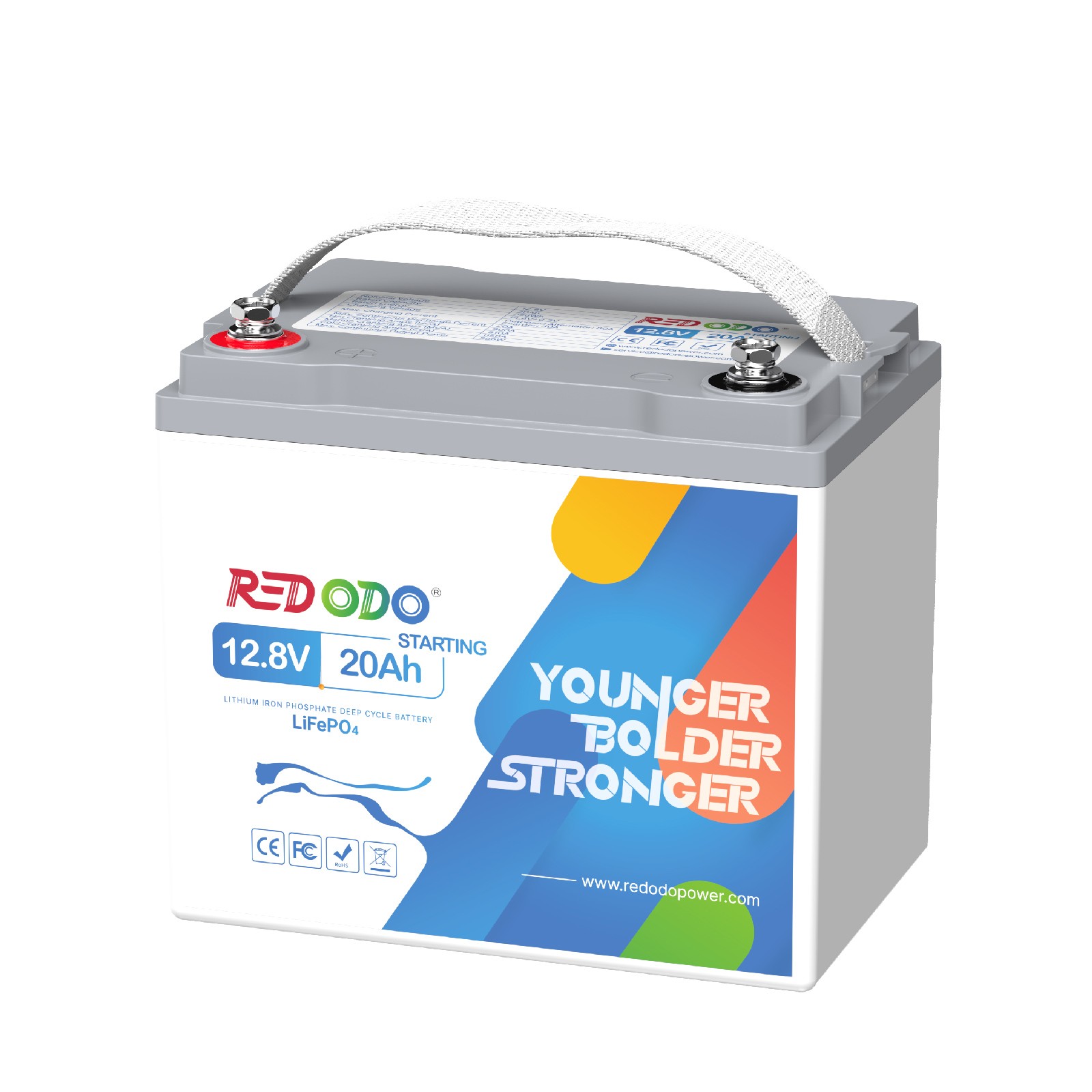
Redodo built this one around starting. The prismatic cells are designed to resist shock and vibration, and the IP67 waterproof rating lets it sit in a wet engine bay without worry. It is small enough for tight spots and still handles trolling motor, marine, and kayak duty, so it can also serve as a compact auxiliary source in a pinch. The trade-off is the 20Ah capacity: it is built to deliver a burst of cranking power, not hours of sustained output. For long-duration loads such as a trolling motor running all day, this is not the battery to drain. If your setup needs both starting and long runtime, pair the Redodo with a larger house battery rather than expecting this one to do both.
KEPWORTH 100Ah LiFePO4 12V Battery
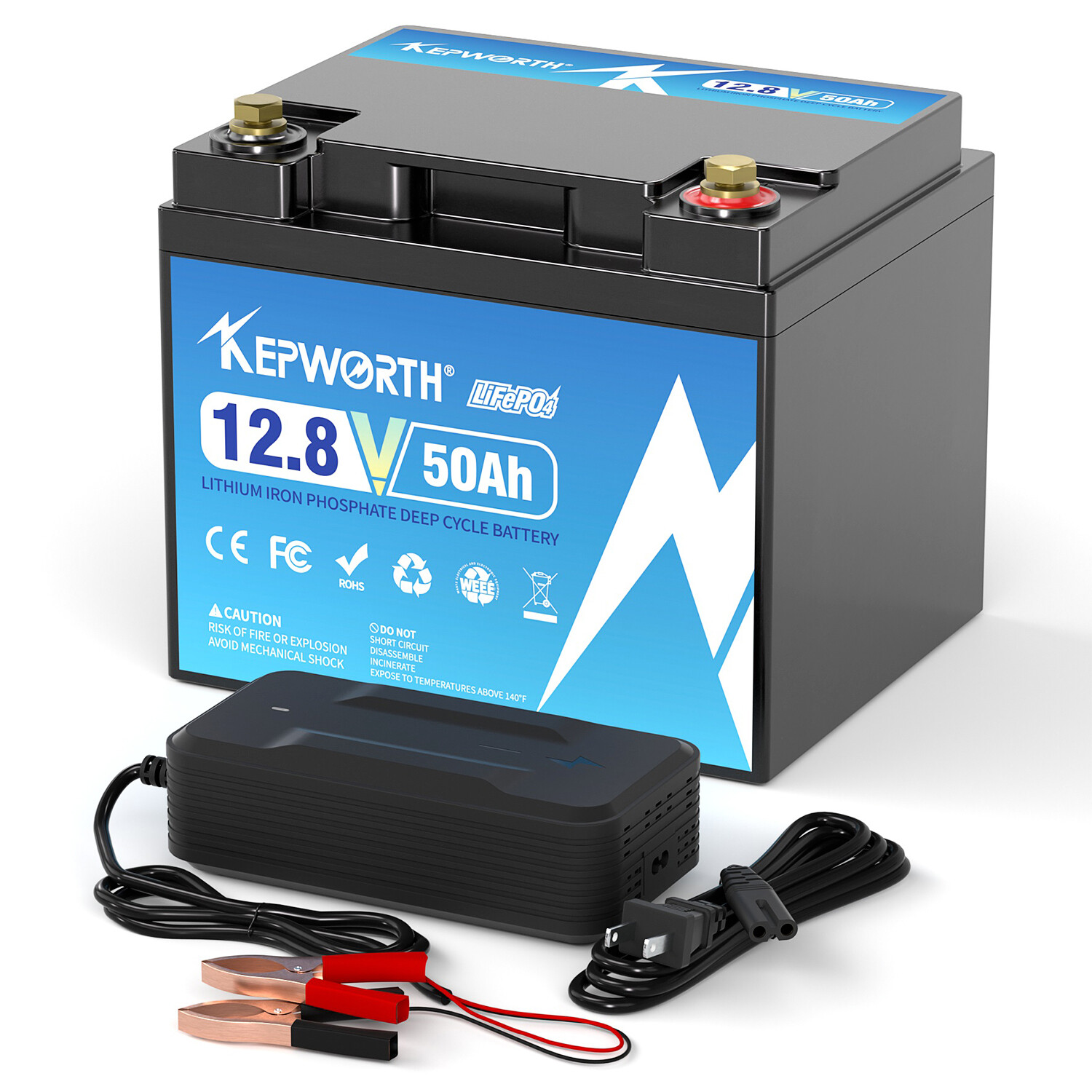
KEPWORTH designed this as a deep-cycle battery for high-drain devices, and the 100A BMS supports serious continuous draw. The LiFePO4 chemistry delivers 100 percent usable power at roughly half the weight of lead-acid, which is a big help in a boat. It suits solar and RV use as well as marine deep cycling, so it works in a range of setups. The limitation is that its application is high-drain devices, so in a single-battery setup you would still want a dedicated starting battery alongside it. Think of it as the runtime half of a split system, not the cranking half.
Final choice by use case
- Choose the Redodo 12V 20Ah when your priority is starting performance in a compact, waterproof package.
- Choose the KEPWORTH 100Ah when you need sustained power for solar, RV, or high-drain equipment and want to maximize run time.