When you're choosing marine electrical batteries lighting, the first question is not voltage-it's the job. Do you need a burst of cranking power to spin an outboard motor to life, or a deep-cycle bank that can run lights, pumps, and solar-charged gear for hours? The LiTime 12V 20Ah 800 CCA Starting Battery and the KEPWORTH 100AH 300AH LiFePO4 12V Battery both use lithium iron phosphate and charge with CC/CV, but they are built for different halves of that decision.
Quick verdict
If your boat needs a dependable starter for an outboard, ATV, or lawn mower, the LiTime starting battery at $113.99 is the clear match. If your priority is a deep-cycle power source for RV, solar, or marine use, the KEPWORTH at $99.98 gives you a much larger capacity range for about $14 less.
Side-by-side comparison
| Feature | LiTime 20Ah 800 CCA | KEPWORTH 100AH 300AH LiFePO4 |
|---|---|---|
| Listed price | $113.99 | $99.98 |
| Primary role | Starting and cranking for outboard, ATV, UTV, lawn mower | Deep-cycle storage for RV, solar, marine |
| Capacity | 20 Ah | 100 Ah to 300 Ah |
| BMS | 20A with low-temp cut-off and overload recovery | 100A BMS on the 100Ah setup |
| Compatibility notes | Not for Yamaha outboards or car/motorbike/tractor/golf cart/RV starters | High-drain device application; use as energy storage |
Where each product wins
- LiTime wins for starting. The high cranking amperage, self-heating below 32°F, and moisture/salt-spray resistance all point to starting duty. It is the pick when the engine is the only load.
- KEPWORTH wins for capacity. The deep-cycle design and 100A BMS ratings support sustained draws, and the battery is positioned for RV, solar, and marine energy storage rather than momentary cranking.
LiTime Starting Battery
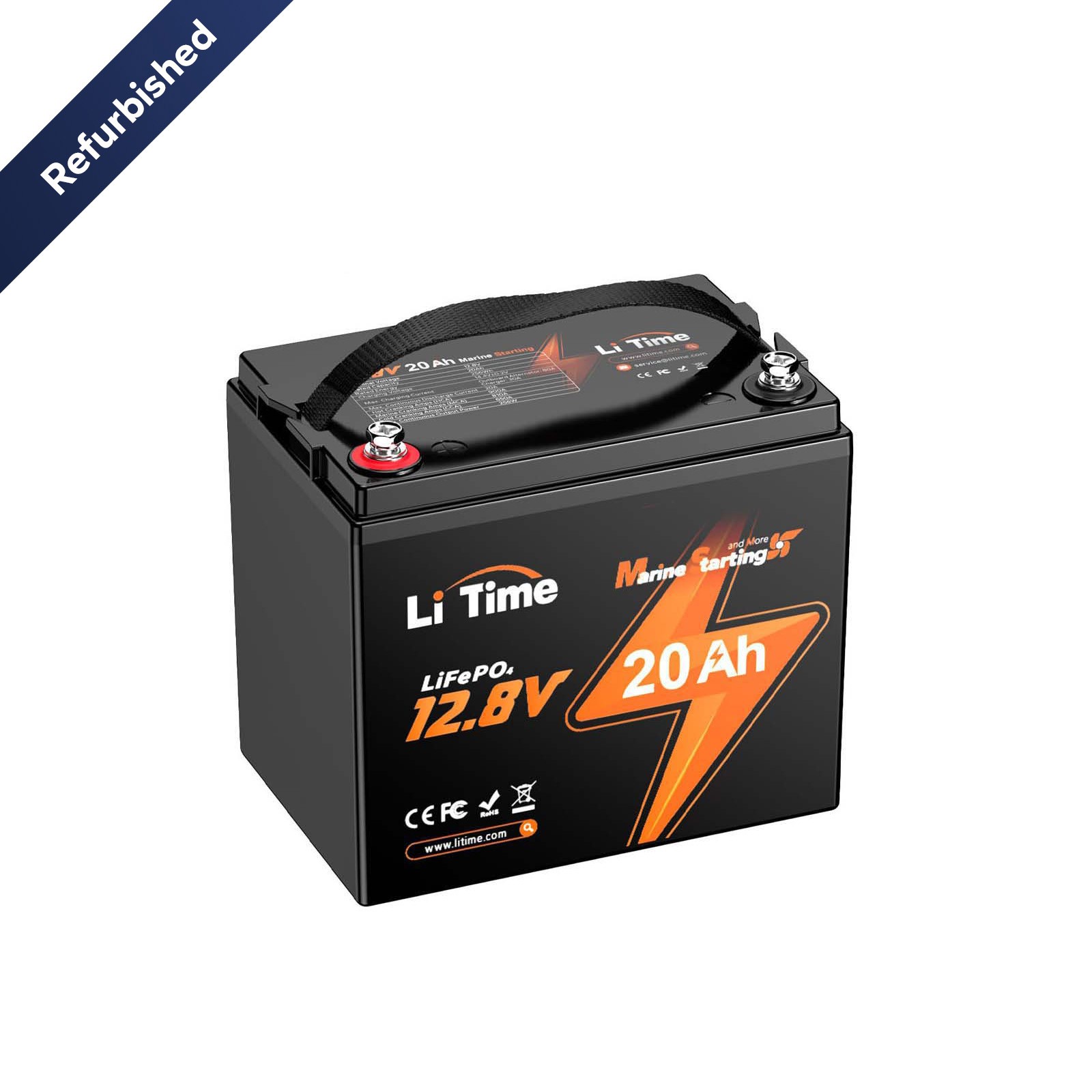
The LiTime is a compact lithium starter with a specific job. Its self-heating function turns on below 32°F, letting the battery warm itself to about 50°F for normal charging, and its upgraded BMS includes low-temp cut-off, 30-second overload recovery, and resistance to moisture and salt spray. It is rated for up to 5000 cranking times and is designed for ATV, UTV, marine engine, and lawnmower starters. The limitation is the scope: LiTime explicitly says not for Yamaha outboards or car, motorbike, tractor, golf cart, or RV starters. The listing is also for a refurbished unit, so this is a cranking solution, not a long-duration power bank.
KEPWORTH Deep-Cycle Battery
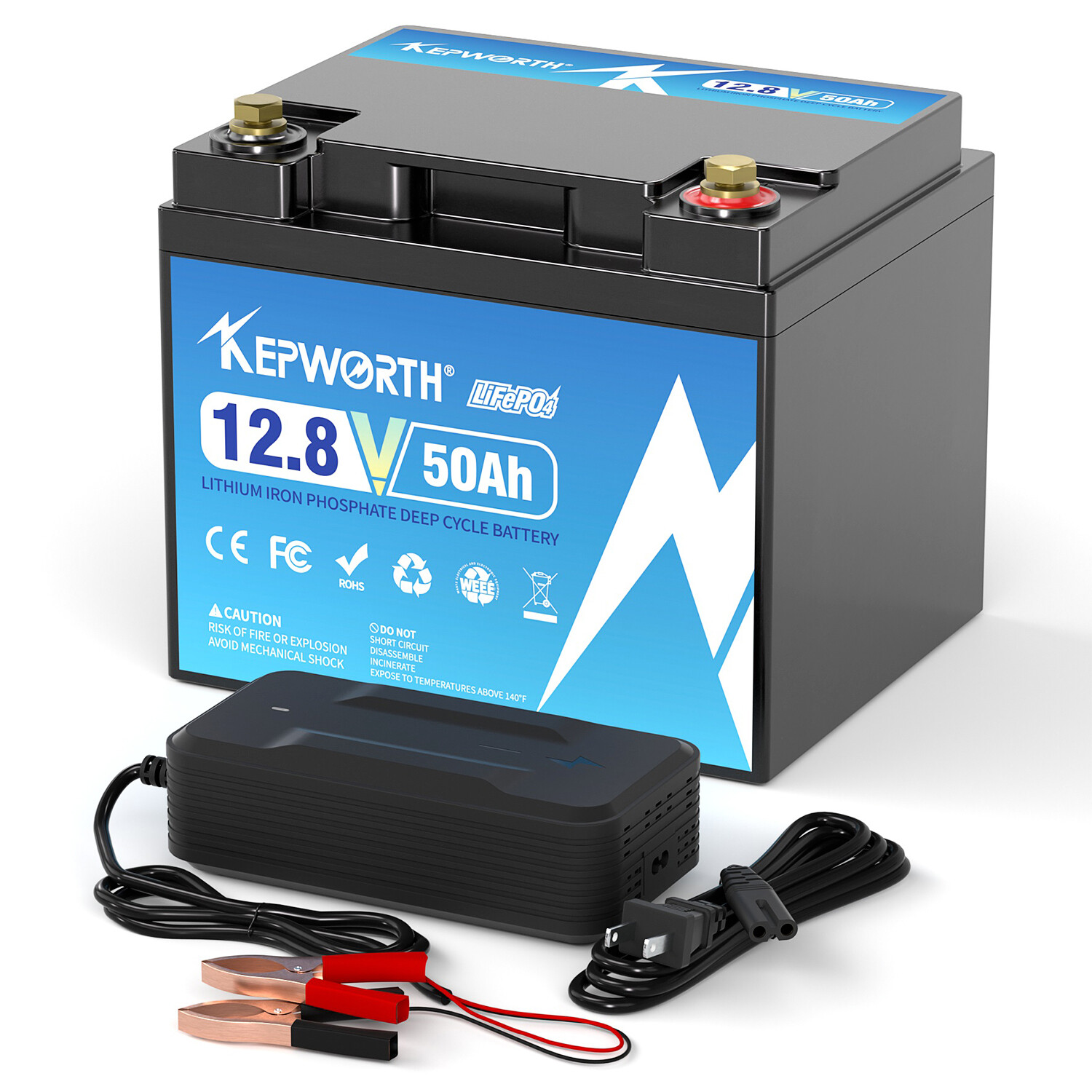
The KEPWORTH is the deep-cycle counterpart in this matchup. Its capacity range gives it the flexibility to act as a multi-day power source for RV, solar, and marine electrical loads, and the listed 100Ah setup includes a 100A BMS plus 100A continuous charge and discharge limits. Weighing about half of a lead-acid battery, it is described with a 10-year service life and 100% usable capacity. The limitation is the role: this battery is not presented as a cranking battery, so boats that need both starting and house power should treat it as the house bank. For deep-cycle duty, this is the one to buy.
Final choice by use case
- For engine starts: Choose the LiTime starting battery. It brings high cranking amperage to the outboard, ATV, or lawn mower.
- For long-duration power: Choose the KEPWORTH deep-cycle battery. It provides a large capacity range and continuous-current protections for RV, solar, and marine loads.
- If you need both: Use the LiTime to start the engine and the KEPWORTH as the house bank.