When you're planning a marine electrical batteries lighting upgrade, the first question isn't which wire to pull-it's whether you need better control or better storage. The Seachoice LED switch panel and the KEPWORTH LiFePO4 battery sit close together in price, but they solve completely different problems. One routes power; the other holds it.
Quick verdict
If your boat's circuits work but you're juggling loose switches and wish you had a tidy way to control every light and pump, the Seachoice 8-switch LED panel is the lower-cost fix at $81.95. If your gear dies because the battery can't keep up over a long day, the KEPWORTH lithium battery at $99.98 is the better investment. For a one-upgrade budget, choose the panel when you're rewiring or reorganizing, and choose the battery when runtime is the real enemy.
Comparison table
| Feature | Seachoice LED Switch Panel | KEPWORTH LiFePO4 Battery |
|---|---|---|
| Price | USD 81.95 | USD 99.98 |
| Price bar | ||
| Core job | 8 LED switches for 12V circuits | 12V LiFePO4 storage with 100A BMS |
| Capacity | - | 100Ah, 100A continuous charge/discharge |
| Best for | Organizing boat electrical controls | Powering high-drain devices over time |
Where each product wins
The Seachoice panel wins for control. If your boat's electrical setup is a tangle of individual toggles and inline fuses, this panel offers a single, visible point to operate and monitor your 12V circuits. It turns a mess of wires into something you can actually manage at the helm.
The KEPWORTH battery wins for staying power. If your gear shuts off mid-outing because the battery can't hold up, this lithium battery is built to keep high-drain devices running longer. It's the kind of upgrade that changes how much time you can spend on the water before you need a charge.
Product notes
Seachoice LED Switch Panel 50-12341
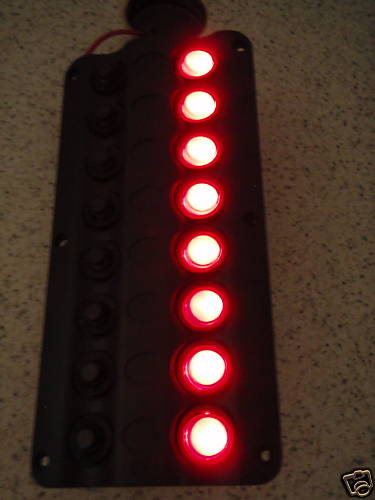
This panel centralizes eight LED switches into a single 12V marine-oriented unit. It's a straightforward way to bring scattered circuits under one control point, and the illuminated switches make it easy to see which circuit is live at a glance. That's a genuine improvement when you're troubleshooting a dark bilge or trying to kill a running light in a hurry. The trade-off is that a switch panel doesn't store energy-it only passes it along. If your actual problem is a battery that dies after two hours, this panel won't extend that runtime. You'll still need a battery with enough capacity behind it, and this panel leaves that job to your existing bank.
KEPWORTH 100Ah LiFePO4 Battery
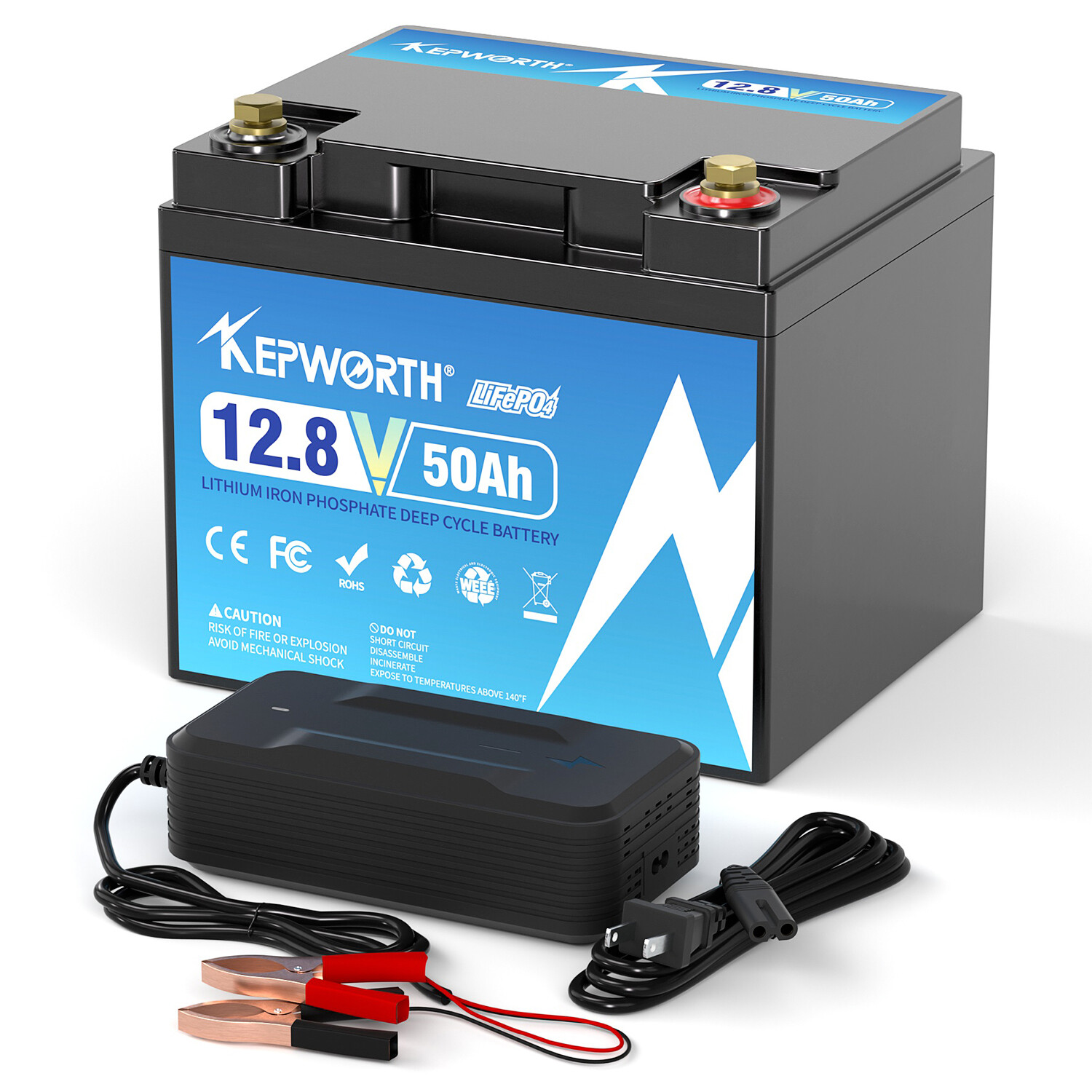
The KEPWORTH battery takes on the storage side of the marine electrical system. Its 12V 100Ah configuration is built for high-drain devices, and the integrated 100A BMS handles continuous charge and discharge at 100A, which is important when a trolling motor or inverter pulls hard. It carries a 10-year service life, 100% usable capacity, and weighs only about half as much as a lead-acid battery. The limitation is the mirror image of the panel: a battery gives you power but does nothing to organize it. You'll still need a switch panel or fuse block to distribute that juice safely to each circuit. In short, this is the energy source, not the control center.
Final choice by use case
Choose the Seachoice LED switch panel if you're working on a boat with a working battery but an outdated or messy switch setup. The centralized layout gives you a clean foundation for building out circuits. Choose the KEPWORTH LiFePO4 battery if your existing battery consistently struggles to finish a day on the water. The deep-cycle design and high-drain support will make the bigger difference in how many hours your gear stays online. For a complete marine electrical batteries lighting refresh, you'll eventually want both-the battery to hold the charge and the panel to distribute it.