Every boat owner reaches a moment at the dock when the waterline looks filthy and a fingertip finds a chip in the gel coat. These two problems happen on the same hull, but they call for completely different tools. One is a cleaning job. The other is a repair job. For marine maintenance, cleaning, and repair projects, the right choice comes down to whether your boat is dirty or damaged.
Quick verdict
Choose the Drillbrush boat hull cleaning brush if the hull is sound and the issue is surface grime. Choose the Fiberglass Boat Repair Kit if the hull has damage that needs to be filled and rebuilt. Match the tool to the job, not the other way around.
At a glance
| Aspect | Drillbrush Boat Hull Brush | Fiberglass Boat Repair Kit |
|---|---|---|
| Price | USD 34.54 | USD 15.74 |
| Best for | Scrubbing dirt and scum off hulls | Filling holes, chips, scratches, and deep cracks |
| Key material | Stainless steel handle with medium-stiff blue brushes | Acrylic/plastic filler with resin and curing agent |
| Color | Blue | White |
| Use | Drill-powered; drill not included | Freestanding; mix and apply |
| What is included | Two brush heads | Resin and curing agent kit |
Where each product wins
Where the Drillbrush brush wins: If the hull finish is sound and the only problem is a dirty waterline, this tool saves your arms. It reaches curved sections and awkward spots where hand scrubbing falls short. It is also a handy everyday maintenance tool, not just an emergency fix.
Where the Fiberglass repair kit wins: If you find a hole or crack, cleaning only makes the damage more visible. This kit lets you fill and rebuild the flawed area, restoring the surface so a brush can maintain it later. It is the repair step that comes before cleaning.
Product notes
Drillbrush boat hull cleaning brush
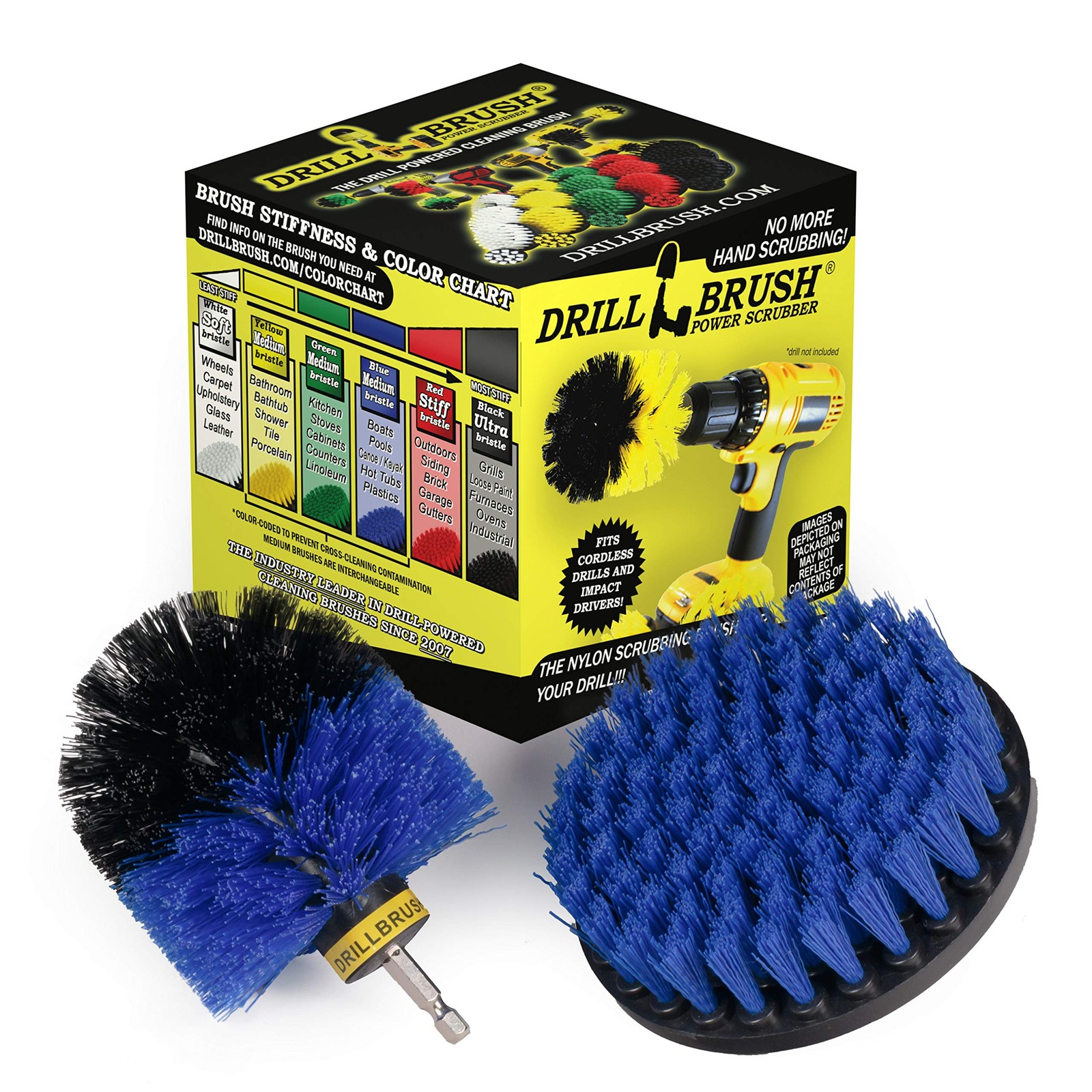
The round, medium-stiff blue brush heads make this a strong choice for knocking off waterline scum, algae, and stubborn stains. You get two brush heads in the package, so you can swap them as the bristles wear or use one for the hull and one for smaller surfaces. The brush is designed around a drill, and the stainless steel handle gives it a bit more weight than a flimsy hand brush. The main limitation is obvious: there is no drill in the box, so you need to supply one. And if the gel coat is cracked or chipped, scrubbing only cleans around the damage instead of fixing it.
Fiberglass boat repair kit
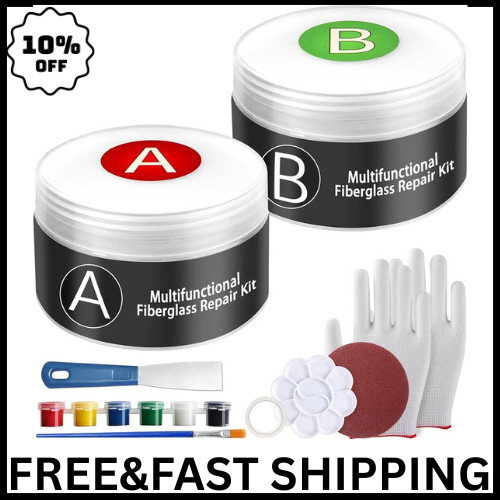
The two-part format is what makes this kit useful: a resin (marked as kit A) and a curing agent (kit B) mix together to fill holes, chips, pits, scratches, and deep cracks. The white acrylic/plastic filler is the actual repair compound, and the freestanding design means you can mix it on a workbench without needing a special mount. At 0.28 kg, it is light enough to keep aboard for quick patches. Where it falls short: it won't remove scum or stains, so a dirty but intact hull still needs a scrubber. Also, the filler comes in white, so the repaired area will be white.
Final choice by use case
- Dirty but intact hull: Drillbrush boat hull cleaning brush
- Hull damage that needs filling: Fiberglass Boat Repair Kit
- Regular maintenance between trips: Drillbrush boat hull cleaning brush
- Surface damage before launch: Fiberglass Boat Repair Kit
- Need a repair kit for boat fiberglass: Fiberglass Boat Repair Kit