Wiring a boat often starts with two very different purchases: a switch panel to control your circuits or a large battery to power them. If you're shopping for marine electrical batteries lighting, you may be weighing the $28.49 6-gang switch panel against the $99.98 LiFePO4 battery. They're not competing for the same job, but many boat owners only budget for one at a time. So which do you put on the boat first?
Quick verdict
If you already have a battery that keeps dying or can't run high-drain gear long enough, the KEPWORTH LiFePO4 battery is the priority. If your battery is fine but your power distribution is messy and you need to switch multiple 12V devices safely, start with the 6-gang switch panel. The panel is the cheaper, lower-risk first purchase; the battery is the larger investment with more impact on runtime.
Comparison at a glance
| Comparison | 6-Gang Switch Panel | LiFePO4 Battery |
|---|---|---|
| Price | $28.49 | $99.98 |
| Role | Central switching and USB charging | Deep-cycle power storage |
| Key specs | 6 rocker switches, dual USB 5V 3.1A, cigarette lighter socket | 12V, 100-300Ah, 100A BMS |
| Protection | IP66 water-resistant, CE/DOT/SAE approved | BMS protection, UN38.3, MSDS |
| Ideal use | Organizing lights, pumps, and accessories | Running high-drain devices for extended periods |
Where each product wins
Where the 6-gang switch panel wins
It costs $28.49, which makes it the less intimidating first step. It gives you six illuminated switches, a USB outlet for devices, a cigarette lighter socket, and a voltage display all in one water-resistant unit. If you need to consolidate controls for boat lights, pumps, or other 12V equipment, this panel delivers immediate organization.
Where the LiFePO4 battery wins
For $99.98, you get the capacity foundation for serious off-grid power. With a 100-300Ah range, a 100A BMS, and a design meant for solar/RV/marine use, it can keep high-drain devices powered long after your old battery gives out. It delivers 100% usable capacity and lighter weight than lead-acid, making it a strong power source for continuous use.
Product notes
6 12V Gang Switch Panel Control USB ON-OFF LED Toggle Rocker For Car Boat Marine
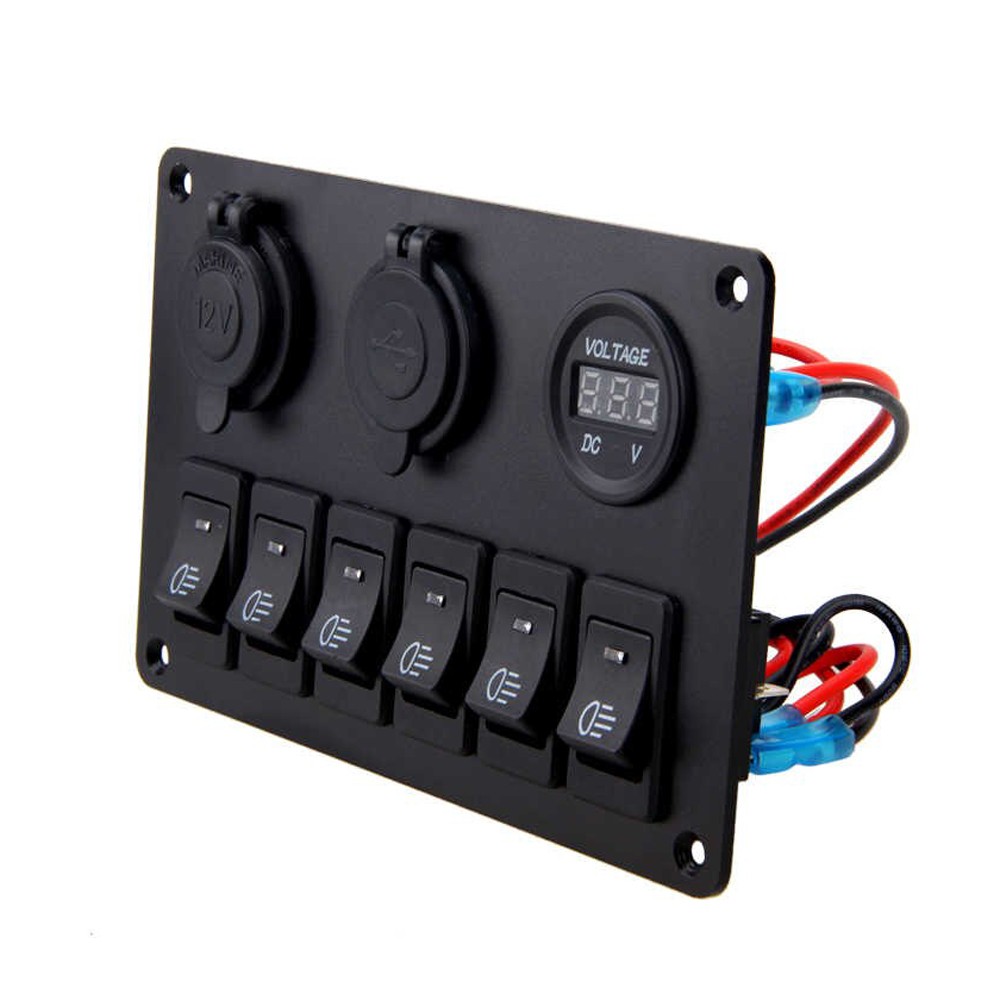
The 6-switch panel is a practical way to bring order to a messy 12V setup. It combines six rocker switches with dual USB ports and a cigarette lighter socket, all on a blue-LED lit face. The panel is rated IP66 water-resistant, so it can handle the damp environment inside a boat console, and the switch contacts handle up to DC 12V 20A per circuit. For a boat owner who wants to connect lights, bilge pumps, and other accessories without a nest of loose switches, this is a straightforward choice. The limitation is its job scope: it's a controller, not an energy source. You still need a healthy battery feeding it, and the panel's 20A per switch limits how much load each circuit can carry. If your battery is weak, this panel won't fix that.
100AH 300AH LiFePO4 12V Lithium Battery BMS Solar RV 15000 Deep Cycles RV Marine
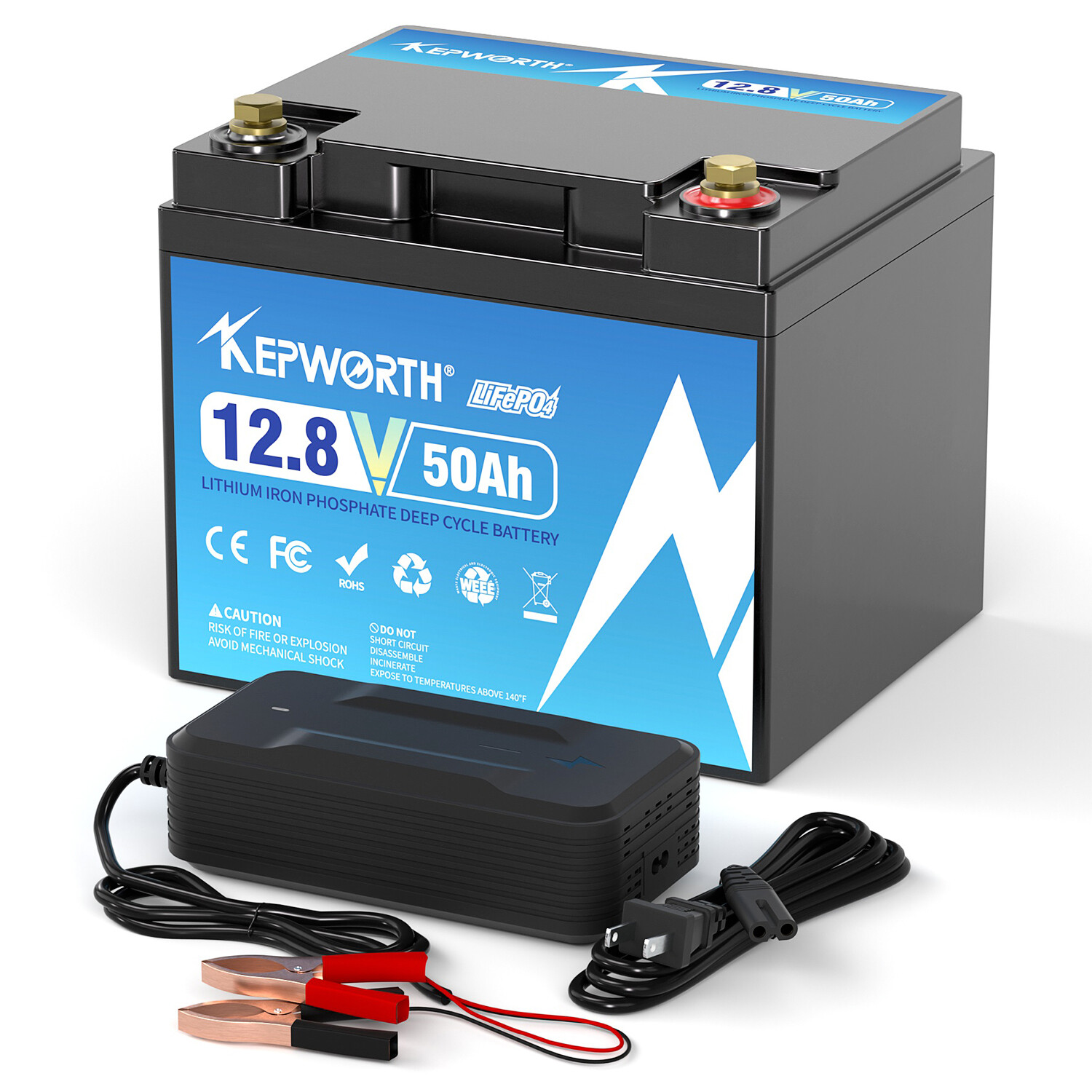
The KEPWORTH lithium battery is for the boater whose priorities are runtime and weight. It's available in capacities from 100Ah to 300Ah at 12V, with a 100A BMS that manages continuous charge and discharge. It delivers 100% usable capacity and weighs only about half of a lead-acid equivalent, which matters when you're placing batteries onboard. The deep-cycle rating of 15,000 cycles and the CE/UN38.3/MSDS compliance point to a product built for long service. The trade-off is that it's a power source, not a control system. You'll still need a switch panel or distribution arrangement to send that power safely to your devices. And at nearly $100, it's a bigger commitment than the switch panel.
Final choice by use case
Choose the 6-gang switch panel if your boat already has a reliable battery and your main problem is controlling multiple 12V circuits from one clean location. Choose the LiFePO4 battery if your current battery can't hold enough charge, you run high-drain devices regularly, or you're planning a solar setup. Many boat owners eventually end up with both-the panel routes the power, the battery stores it-but if you're buying one now, let your immediate pain point decide.