Choosing the right marine engines propulsion for a small boat usually comes down to a simple trade: how much thrust you want versus how much money and complexity you want to carry. These two compact outboards sit close on price, but they take different approaches. One is the higher-output option; the other is the lower-output option with a lower listed price. The decision is about where, how far, and how loaded your boat will be.
Quick verdict
If you need more power for open-water trips and want the stronger of the two, go with the higher-output motor. If you want the lower-priced motor and your boat is a lightweight inflatable, rubber boat, or fishing boat on calm water, the smaller displacement motor is the sensible fit.
Price and specs at a glance
| Motor | Listed Price | Output | Key Traits |
|---|---|---|---|
| 3.5HP 4HP 6HP 7HP Outboard Boat Motor Engine | USD 187.75 | 3.5 HP | Water cooling, CDI ignition, 4000-5000 r/min full-throttle range, gear ratio 27/13 |
| Outboard Boat Engine Motor For All Kinds of Small Boats 2 Stroke 2.3 HP 52CC | USD 165.63 | 2.3 HP | 52cc two-stroke, forced air cooling, CDI ignition |
The price gap is about USD 22.12, and that difference buys a meaningful step up in output. You are not looking at two motors designed for the same mission; you are choosing between more capability and a smaller, lower-cost package.
Where each product wins
The higher-output motor wins when your small boat needs to move against wind or current, cover longer distances, or handle water that can get rough. Its stronger output makes it the more capable pick. The lower-output motor wins when you want to spend less and your trips are short, local, and calm. For a light inflatable or a small fishing boat, that trade is often the right one. Choose based on your usual water, not on the spec sheet alone.
3.5HP 4HP 6HP 7HP Outboard Boat Motor Engine 2 Stroke 4 Stroke Water Cooling
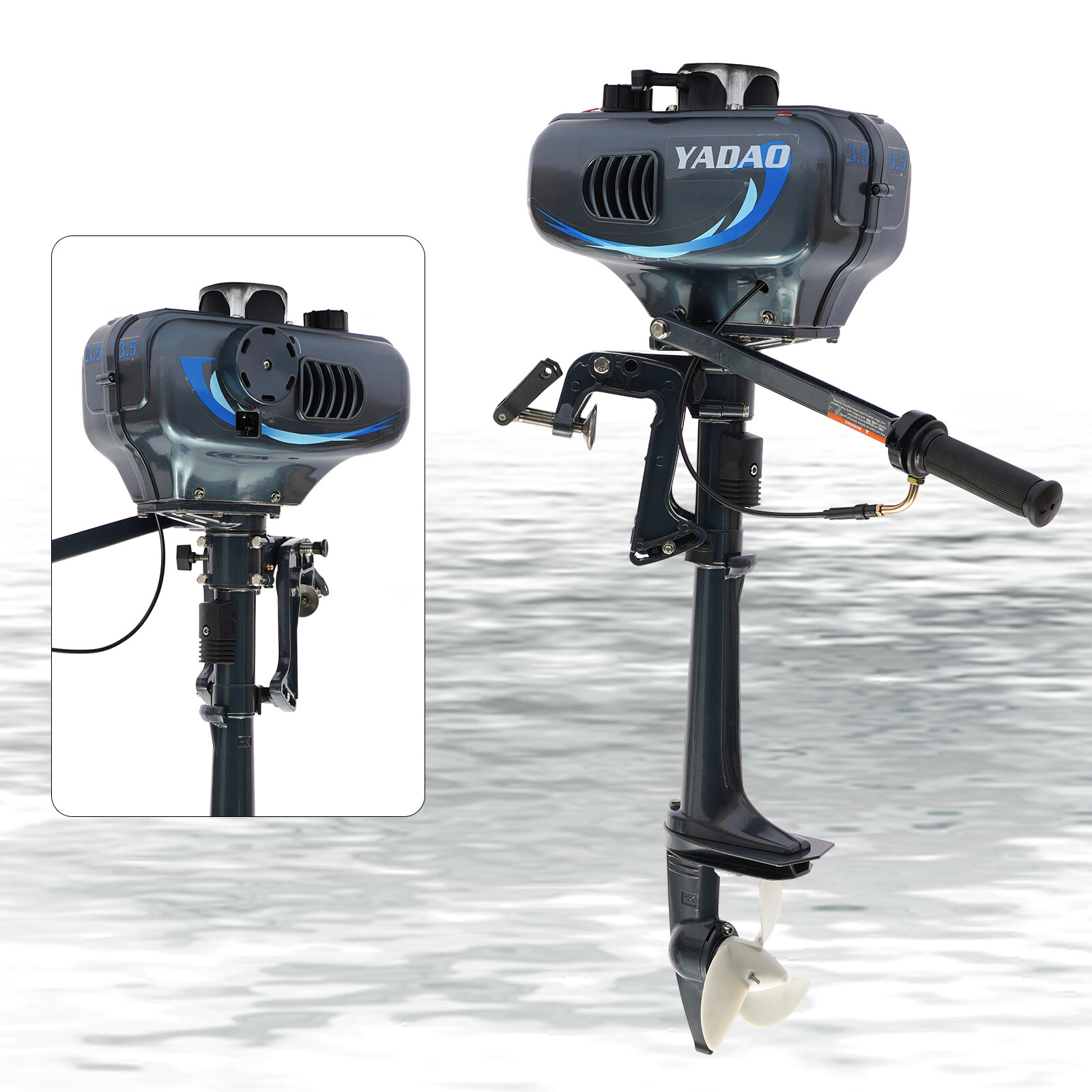
The higher-output option carries the higher listed price in this comparison and gives you 3.5 HP with a full-throttle range of 4000-5000 r/min. Water cooling is the standout for longer runs, and the title itself references a lineup that extends through 4HP, 6HP, and 7HP. CDI ignition supports dependable starts. The limitation is that you pay more for output that only matters if your boat and trips actually call for it. On a very small inflatable with short, calm runs, the extra power may simply be unused capacity in practice.
Outboard Boat Engine Motor For All Kinds of Small Boats 2 Stroke 2.3 HP 52CC
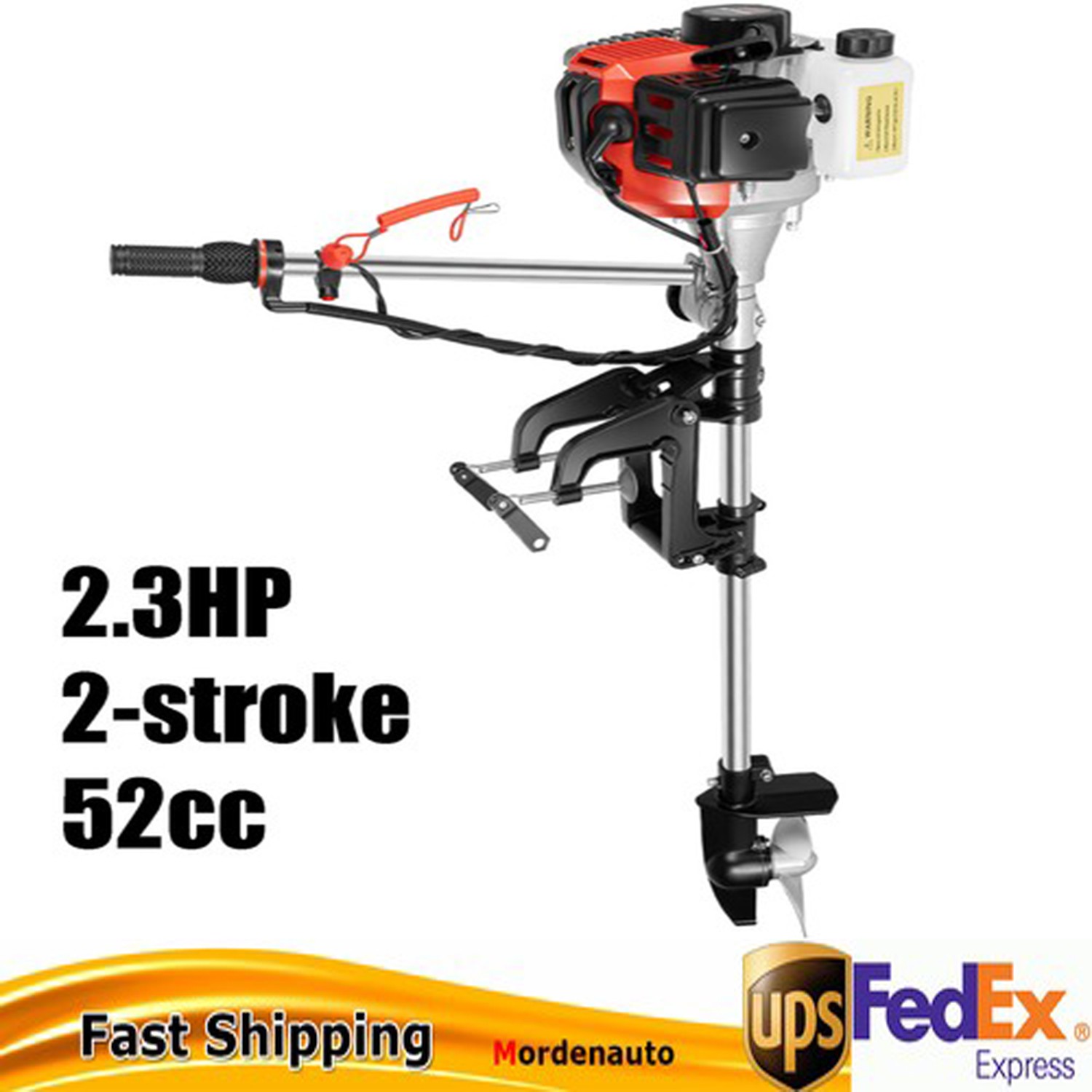
This option is the lower-priced pick of the two, and its 52cc two-stroke engine is specifically aimed at inflatable boats, rubber boats, and fishing boats. Forced air cooling keeps the mechanical side straightforward, and manual trim and tilt give the operator direct control. The limitation is muscle: at 2.3 HP, it will feel less eager when you want to move a loaded hull or fight a stiff chop. If your boating is mostly calm-water and close to home, the smaller package is a tidy fit for most people with a small boat.
Final choice by use case
Pick the higher-output motor when you want the stronger motor for longer or more demanding outings. Pick the lower-priced motor when keeping the purchase price low matters most and your boat is a light inflatable, rubber boat, or fishing boat for local water.