In the boats personal watercraft section, choosing a small outboard usually comes down to price and intended use. Here, two listings show the same compact 2-stroke motor at different prices, so the real question is whether the lower-priced listing leaves anything on the table.
Quick verdict
If you are choosing between two versions of the same 3.5HP 2-stroke outboard, the lower-priced listing is the better buy for most dinghy and small fishing boat owners. The two listings are about $18.85 apart, and the only meaningful difference on paper is the price. You get the same motor, same starting system, same fuel-to-oil ratio, and same included parts from either listing, so the lower price gives you the same package for less money.
Comparison table
| Specification | Lower-priced option | Higher-priced option |
|---|---|---|
| Listed price | USD 157.77 | USD 176.62 |
| Starting system | Manual Start | Manual Start |
| Engine output | 3.5 HP | 3.5 HP |
| Ignition | CDI System | CDI System |
| Fuel-to-oil ratio | 35:1 | 35:1 |
| Gear ratio | 27/13 | 27/13 |
| Adjustment rod length | 40cm/15.75in | 40cm/15.75in |
| Engine height | 16cm/6.30in | 16cm/6.30in |
Where each product wins
Where the lower-priced option wins: It wins on price. It shares every listed specification with the higher-priced option, but costs less. That is exactly the edge most buyers care about when they are equipping a small dinghy or lightweight fishing boat.
Where the higher-priced option wins: It does not win on specifications. The two listings describe the same engine, the same included accessories, and the same dimensions. The higher-priced version is essentially the same motor with a larger price tag, so it only makes sense if you prefer that listing for a reason outside the motor's specs.
Product notes
The Lower-Priced 2-Stroke Outboard
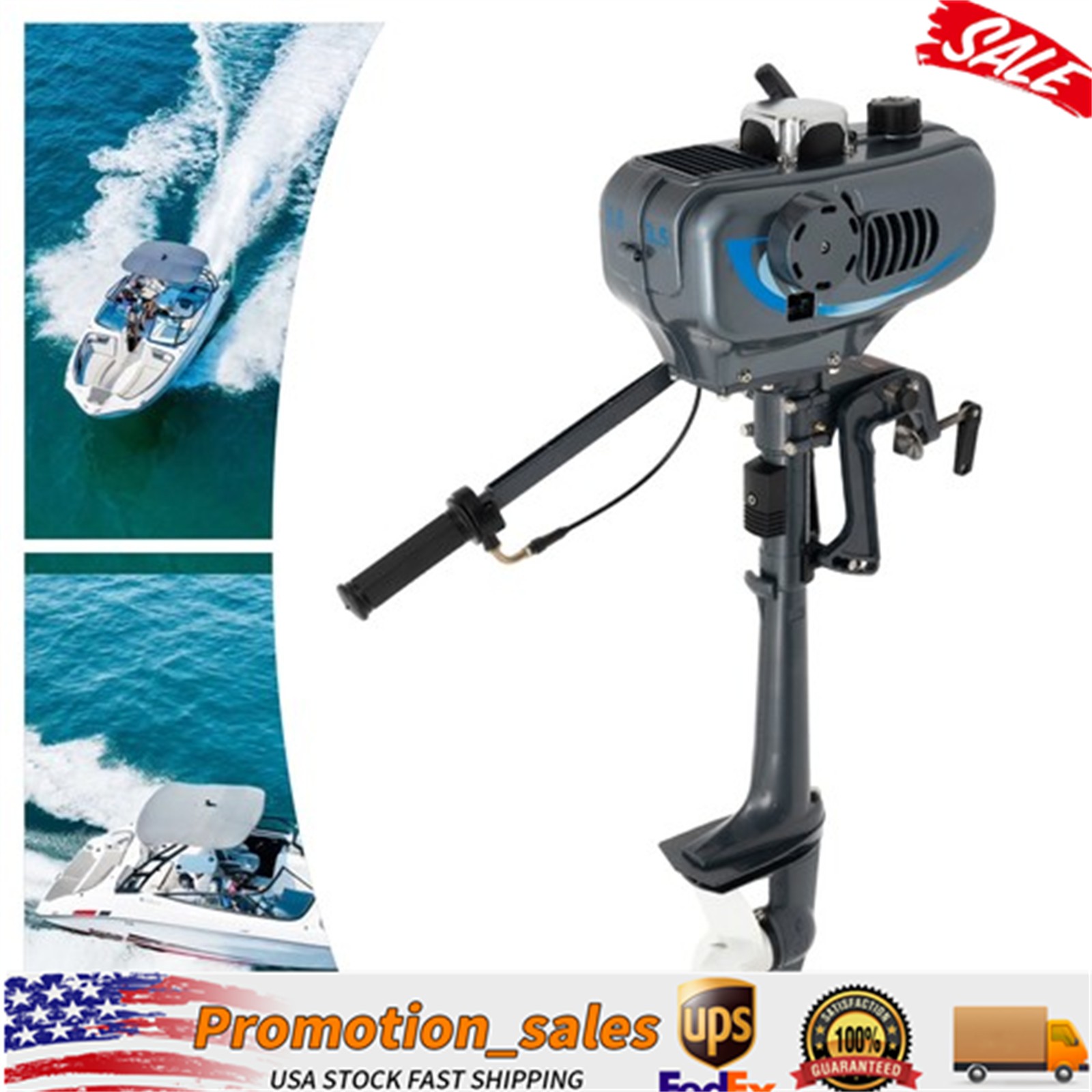
This is the listing to choose when you want the same two-stroke package without spending extra. The price is the main draw: it costs less than the other version while matching the motor's listed output and included extras. The starter, funnel, water pump impeller, and fuel oil mixing bottle all come in the package, so you are ready to set up a small dinghy or fishing boat right away. The limitation is the motor's intended territory: this is a dinghy and small fishing boat outboard, not a high-speed power plant. You will be mixing fuel before launching and pulling a starter cord to get it running, which is what a two-stroke at this level asks for.
The Higher-Priced 2-Stroke Outboard
If the higher-priced listing is the one that fits your situation, you still get a complete outboard package without giving up anything in the description. The trade-off is that the extra cost does not change the motor's output, starting method, or included components. What you are really deciding is whether the price gap matters to you. For a small fishing boat or dinghy, that extra outlay does not add capability, so you should only choose this version if you have a reason to prefer it over the lower-priced listing beyond the product itself.
Final choice by use case
For a first outboard on a dinghy or small fishing boat, the lower-priced version is the one to buy. It delivers the same two-stroke setup for a smaller upfront cost. For anyone who prefers the higher-priced listing, the product is identical in every listed respect; you are simply paying more for the same motor. Choose the lower-priced option unless the higher-priced listing solves a convenience or preference issue that the price gap justifies.