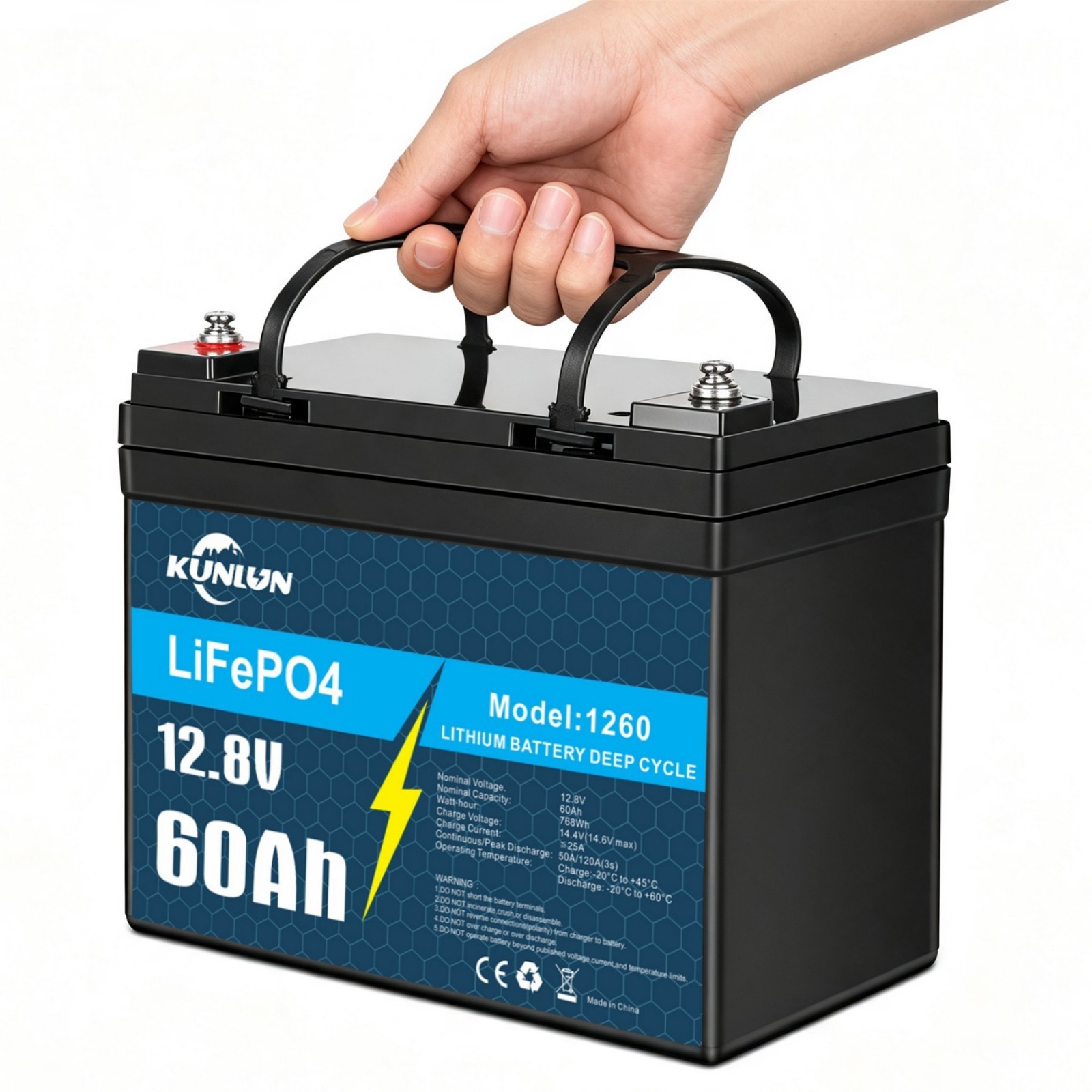
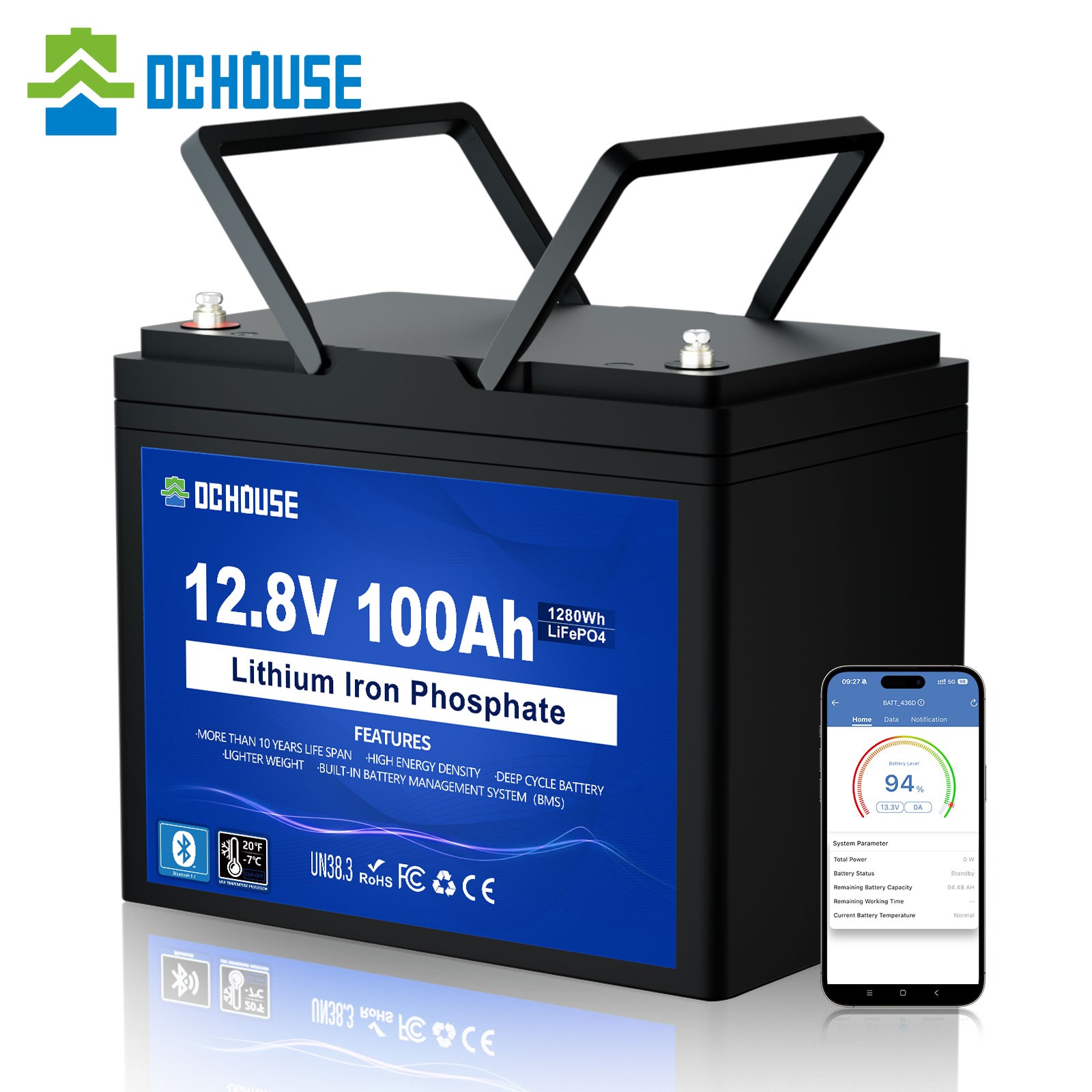
Choosing a deep-cycle lithium battery for a boat, RV, or off-grid rig usually comes down to one question: how much load will you draw at once and how long do you need it to run? Both of these 12V LiFePO4 batteries are positioned for marine, RV, and portable power, but they take different paths. The 60Ah model is a compact 768Wh energy block with a 30A continuous discharge ceiling. The 100Ah model is a higher-capacity 1280Wh unit that can sustain 100A continuous discharge and adds Bluetooth monitoring.
Quick verdict
If your power demands are modest-LED lights, a small trolling motor, or a basic cabin load-the 60Ah battery is the lower-priced pick and the easier fit in tight compartments. If you want more headroom for inverters, solar storage, or longer off-grid stretches, the 100Ah battery is worth the higher listed price. For most lithium upgraders who plan to size around their loads, the 100Ah is the more flexible long-term buy.
How the two batteries compare
| Spec | 12V 60Ah LiFePO4 Battery | 12V 100Ah Lithium Battery |
|---|---|---|
| Listed price | USD 109.99 | USD 193.75 |
| Price bar | ||
| Rated capacity | 60Ah | 100Ah |
| Energy | 768Wh | 1280Wh |
| Max continuous discharge | 30A | 100A (1C) |
| Dimensions | 7.70 x 5.10 x 6.30 in | 260 x 168 x 234 mm |
Where the 60Ah wins
- Lower listed price.
- Smaller footprint in inches.
- Matches light RV, marine, camping, and backup-power loads.
Where the 100Ah wins
- More rated capacity and stored energy.
- 100A continuous discharge for heavier loads.
- Built-in Bluetooth monitoring through the DC HOUSE app.
- Title carries a 4000+ deep-cycle claim.
12V 60Ah LiFePO4 Battery, Deep Cycle, Perfect for RV, Marine
At $109.99, this battery gives you a 12.8V nominal system with 60Ah of capacity and 768Wh of stored energy. The rated specifications include a 50A BMS and a 30A continuous discharge current, which is enough for moderate house loads, portable power boxes, or a small trolling motor. It also accepts charging from a solar panel plus charge controller, a battery charger, or a generator feeding a LiFePO4 charger, so you are not locked into one charging setup. The limitation is the 30A discharge ceiling: if you attach a larger inverter or run high-draw equipment, the battery will hit its current limit earlier. Keep this one for the loads you know will stay modest.
12V 100Ah Lithium Battery 4000+ Deep Cycle LiFePO4 BMS RV Solar Marine Off-Grid
This 100Ah model steps up to 1280Wh and a 100A (1C) continuous charge and discharge rating, so it can feed larger inverters and handle heavier marine loads without giving up after a short burst. Built-in Bluetooth lets you monitor state of charge, voltage, and current through the DC HOUSE app, which makes system checks simpler. The title also points to a 4000+ deep-cycle claim for the LiFePO4 chemistry. The trade-offs are size and price: the case measures 260 x 168 x 234 mm, so it takes more space, and it sits at the higher end of the listed price range. You are buying extra headroom and easier monitoring, not just more cells.
Final choice by use case
Choose the 60Ah if your largest draw stays under 30A and you prefer the smaller, lower-priced package for weekend trips or backup power. Choose the 100Ah if your setup includes solar, off-grid living, or a large inverter, or if you want Bluetooth monitoring and the higher continuous discharge rate. For a serious marine or RV system where repeated deep cycles are part of the plan, the 100Ah's title explicitly lists the 4000+ deep-cycle rating.